The Geography of Memory
Special Announcement: Sign up for to join us for a 60-minute preview and demonstration of the Geography of Memory.
1pm - 2pm Eastern Time June 1, 2026 | Via Zoom
Be among the first people exposed to an emerging planning framework that could shape future infrastructure, equity, and redevelopment practice nationally.
A National Initiative on Spatial Trauma & Trauma-Informed Planning
The Geography of Memory examines how collective trauma becomes embedded in physical places and continues to shape mobility, public trust, redevelopment outcomes, and community interaction with the built environment.
Geography of Memory final tools and concepts will be a direct intervention on:
Failed engagement
Redevelopment conflicts
Infrastructure underutilization
Spatial mismatch
Distrust
Opposition to projects
Geographic inequities, and
Planning-induced displacement.
Thrivance Institute is developing practical tools, assessment methods, and planning frameworks to help cities and organizations identify and respond to spatial trauma before major investment and redevelopment decisions are made.
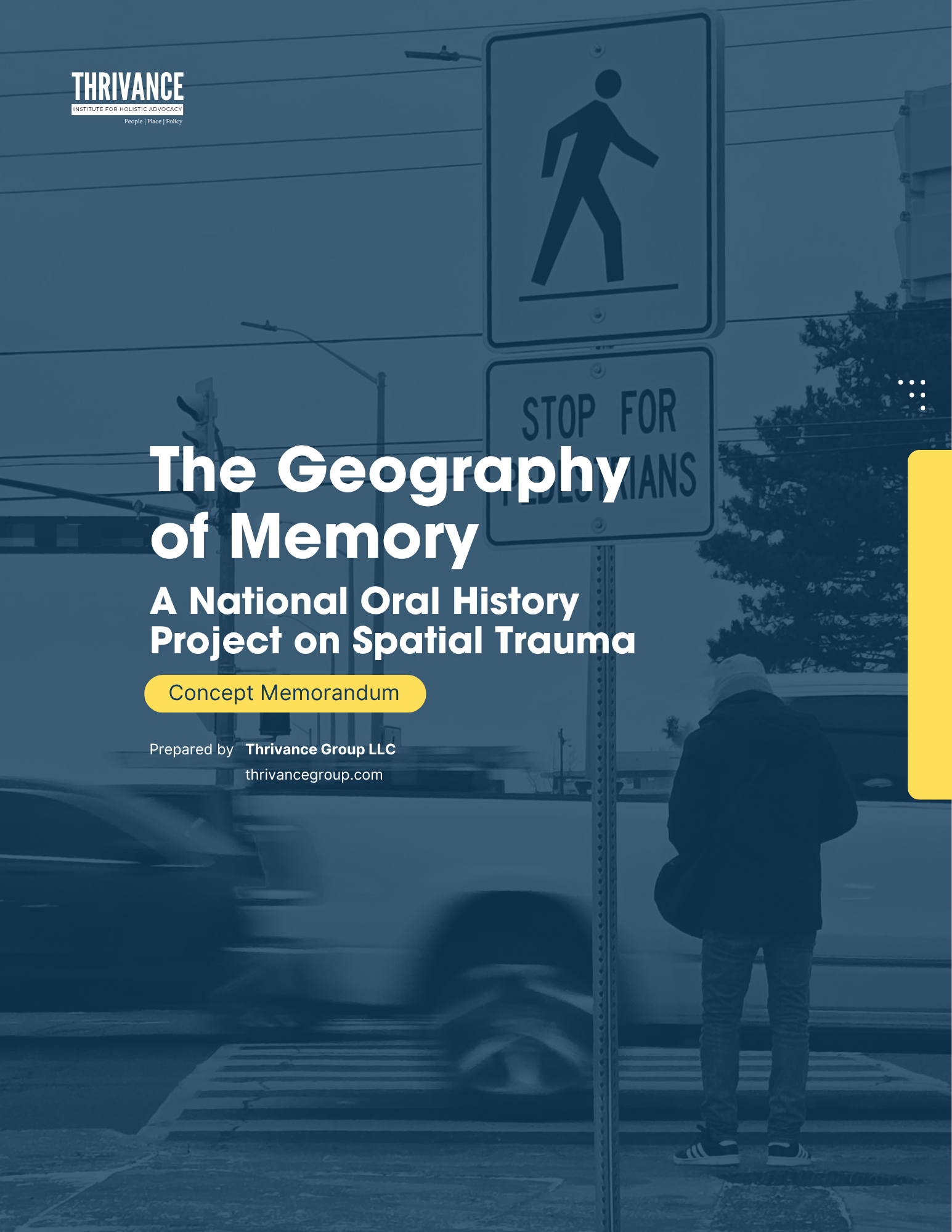
Now is the time to focus in on spatial trauma…
Communities often carry memories connected to particular places:
Sites of police violence
Highways that displaced neighborhoods
Environmental contamination
Forced removals
Racial terror
Repeated traffic violence
Neglected public infrastructure
Yet planning systems rarely account for how these histories continue to shape trust, mobility, participation, infrastructure use, perceptions of safety, and redevelopment outcomes. Without tools to recognize these dynamics, cities risk making investments that unintentionally reinforce harm.
The Geography of Memory Initiative helps agencies and communities develop practical, trauma-informed approaches to planning and investment.
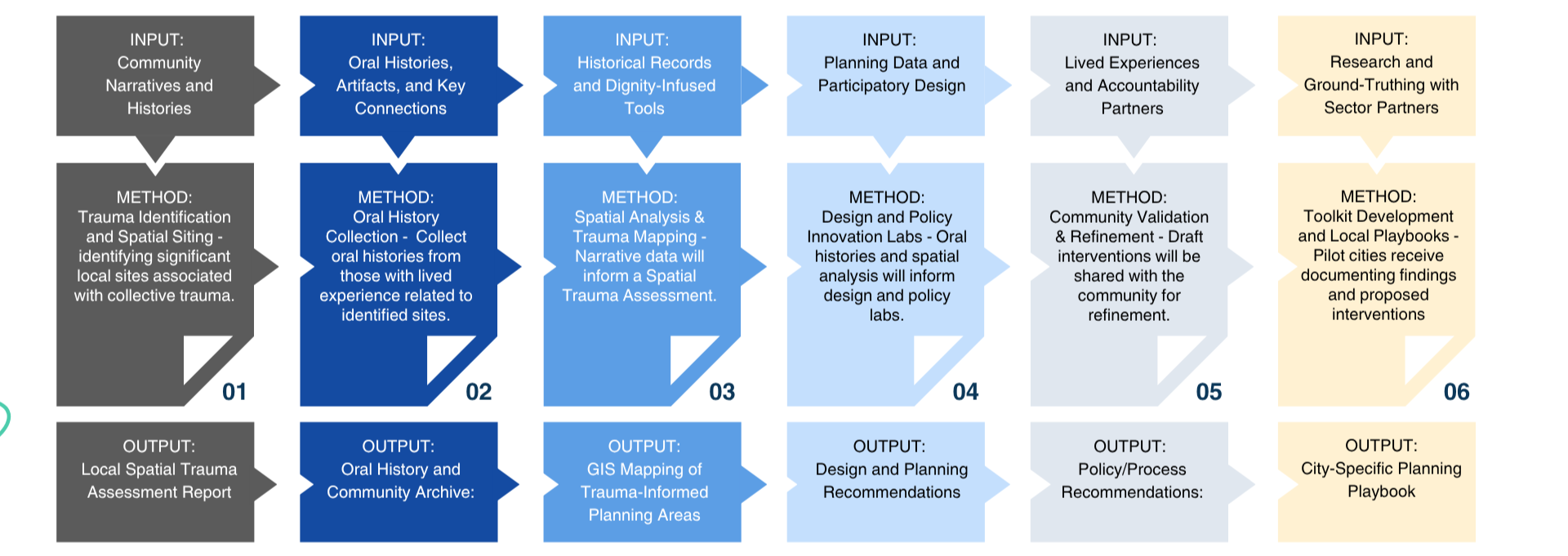
Spatial Trauma Assessment Methodology (STAM Model) Overview
Help Shape the Future of Trauma-Informed Planning
We are actively building partnerships with public agencies, researchers, planners, advocates, cultural institutions, and community organizations interested in advancing trauma-informed approaches to infrastructure, mobility, redevelopment, and public space.
Schedule a briefing today to bring a Geography of Memory workshop to your organization, join the Learning Network, or to partner on a pilot.
Who We Work With:
City governments
MPOs and transit agencies
Public health departments
Offices of racial equity
Community-based organizations
Philanthropic institutions
Universities and researchers
Housing and redevelopment agencies
Mental health and trauma practitioners
Available Engagements:
Pilot Projects
Strategy Advising
Workshops & Trainings
Public Speaking
Research Partnerships
Community Engagement Facilitation